Overview
As the LTI 1.3 specification has been built into many mainstream Learning Management Systems like Canvas and Blackboard, the Labflow team has added support for LTI 1.3 core and LTI Assignment and Grade Services (one of the key LTI Advantage services).
This new Labflow feature will simplify LTI Tool setup for LMS administrators while adding richer and deeper integration between your institution’s LMS and the Labflow platform. This improved integration will include the ability to return individual assignment grades from Labflow to the institution’s LMS. Exchanged individual assignment scores will allow instructors to easily configure their gradebooks in their own LMS, the system of record.
The following instructions should cover adding the Labflow App to your Canvas LTI 1.3 enabled course, and linking the Labflow App with your Canvas course.
Instructions
Adding the Labflow App to a Course in Canvas
After the Labflow support team has confirmed the completion of your LMS configuration, you should be able to add the Labflow app link to any course that has the app registered.
If your Institution does not allow instructors to add external learning tools to an LMS course, it may require a written request on your part to have the Labflow tool added to your LMS course.
We suggest creating a Canvas course module and adding the Labflow external learning tool as a part of the module.
Note: The Labflow tool in this new Module will be what your students use to access Labflow. They will not be able to log into Labflow by typing in the labflow.com URL.
They MUST click on the Labflow tool in your LMS course
By doing so they will be automatically taken to the corresponding Labflow course with their correct name and email address.
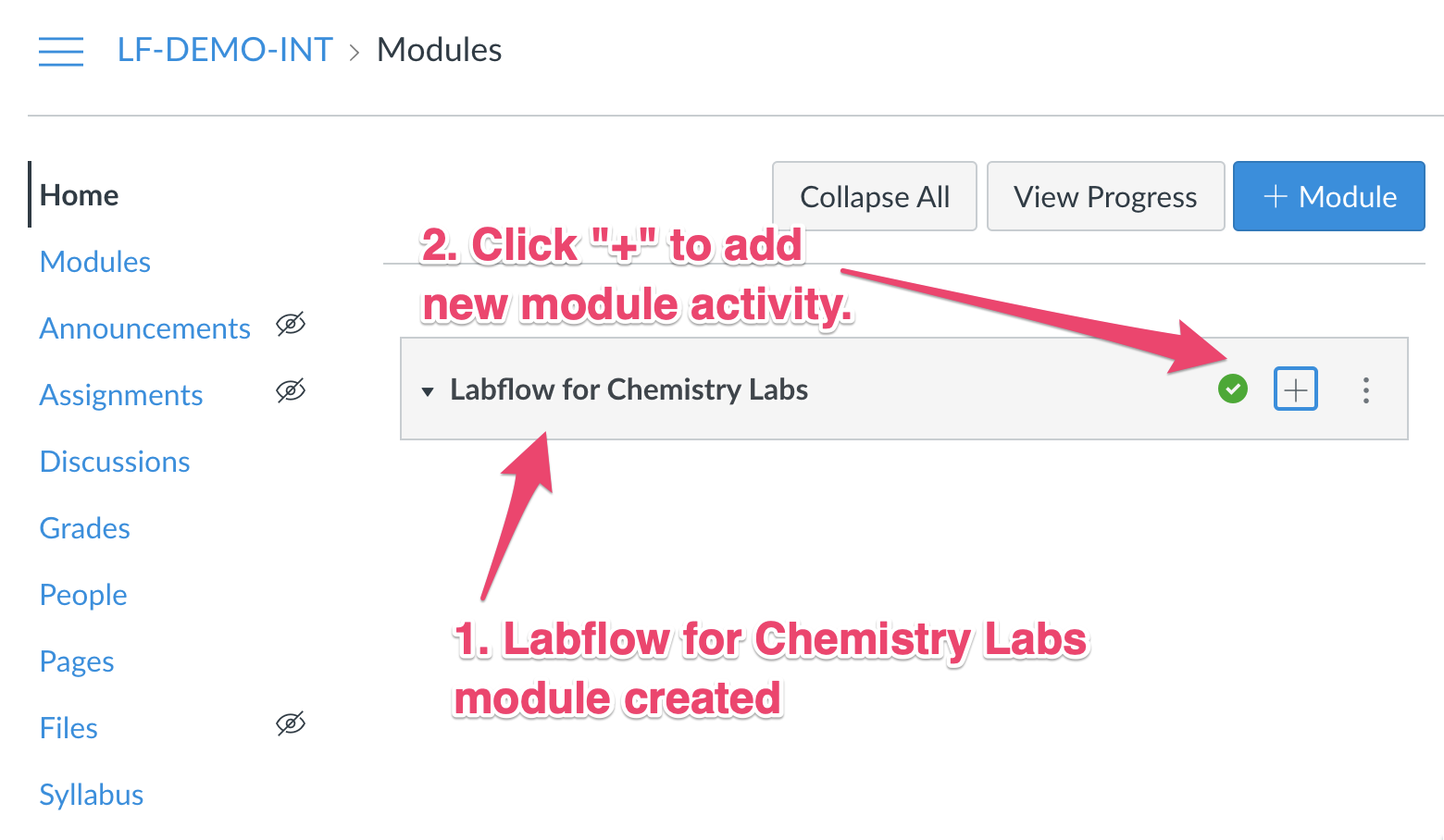
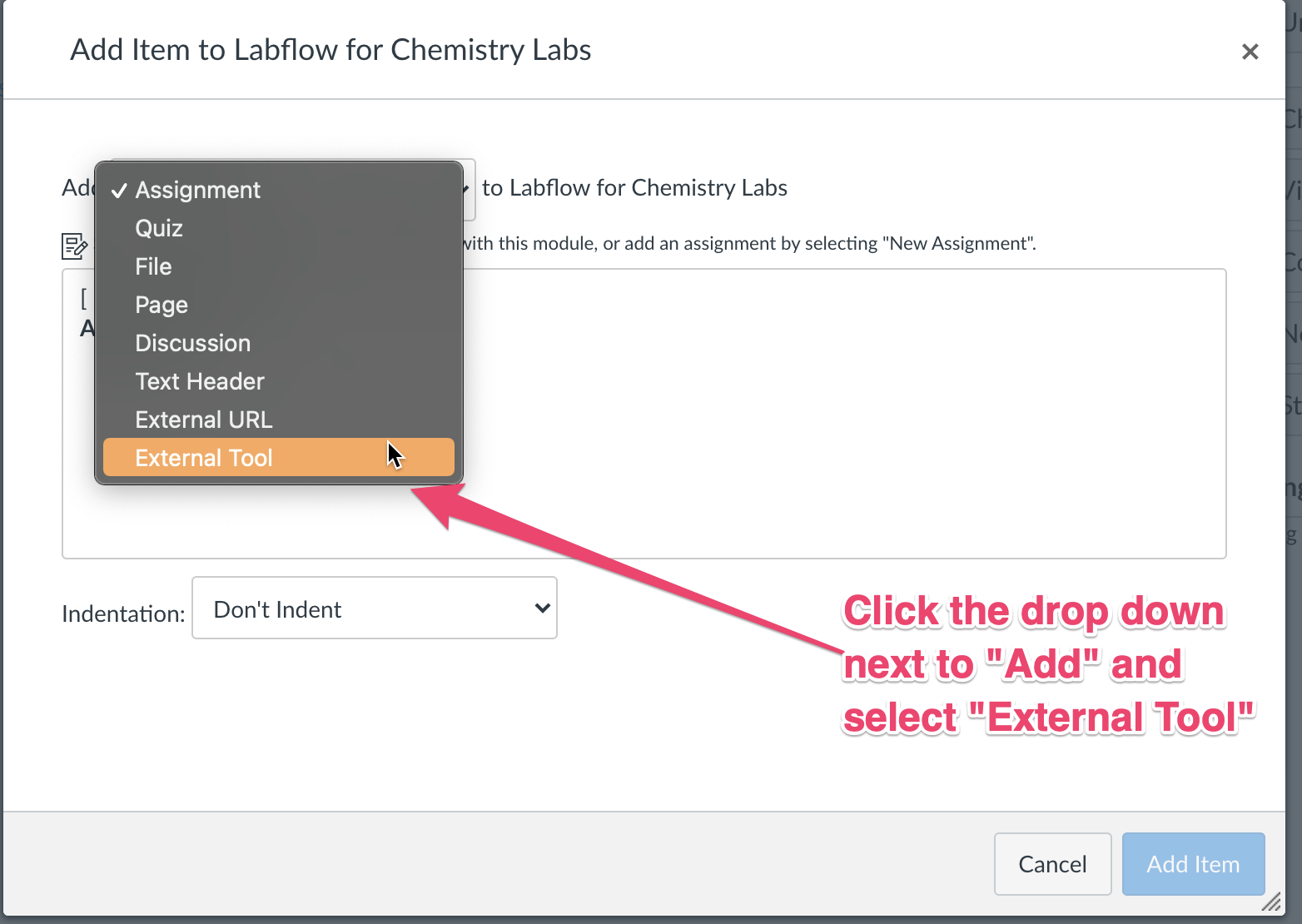
Create a new External Tool activity in the course module.
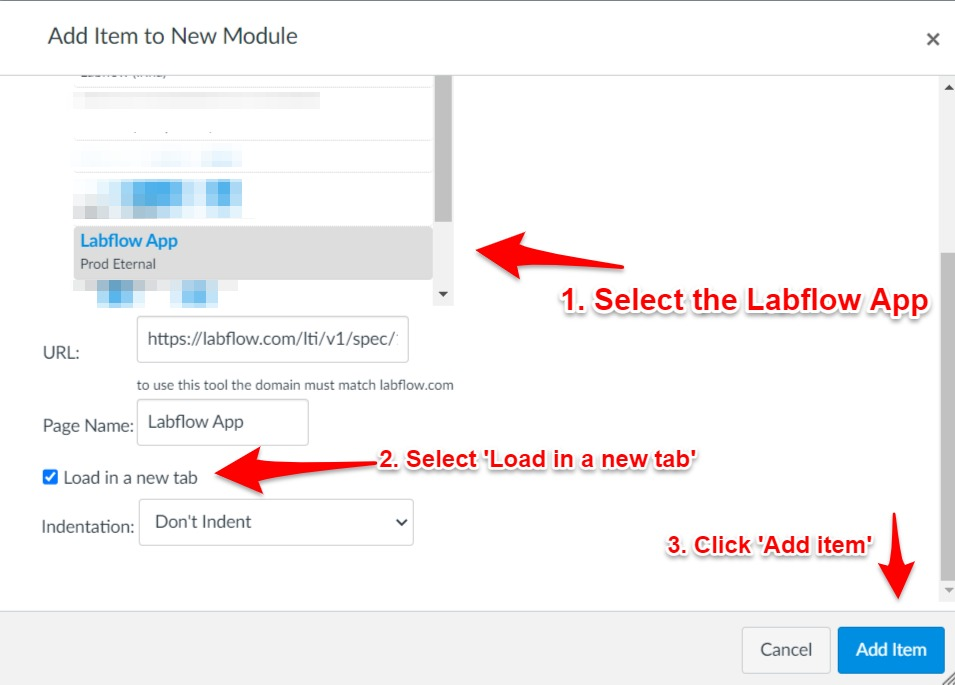
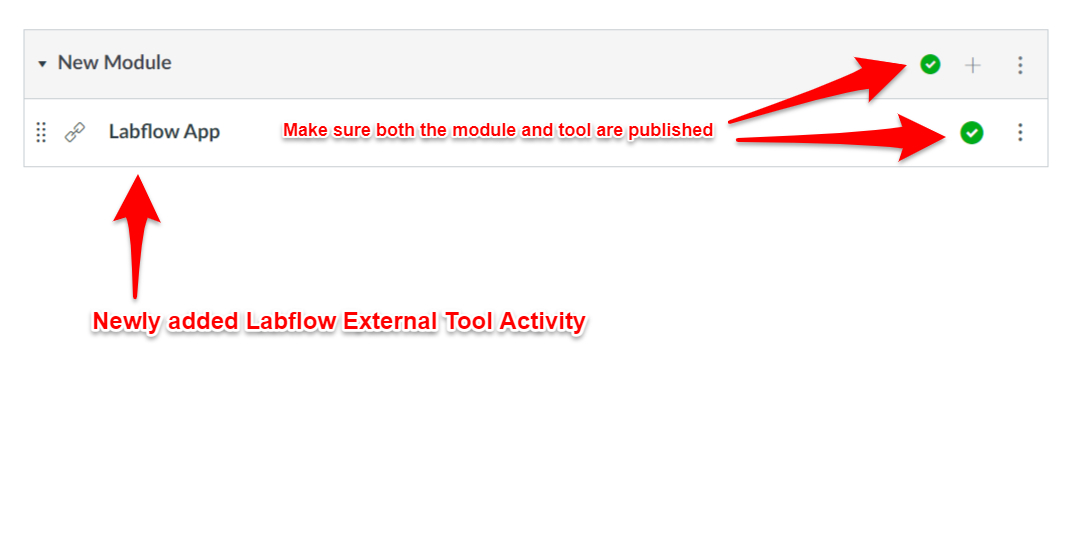
Select the Labflow app (you might need to check with your LMS administrator for the title of the external tool that was created) from the list and click “Add Item”.
Launching and Linking the Labflow Courses to Canvas Courses
Once the “External Tool” activity is created, it's time to launch and link the Labflow Course to Canvas Course. These steps should be completed by the instructor registered with the respective Labflow course.
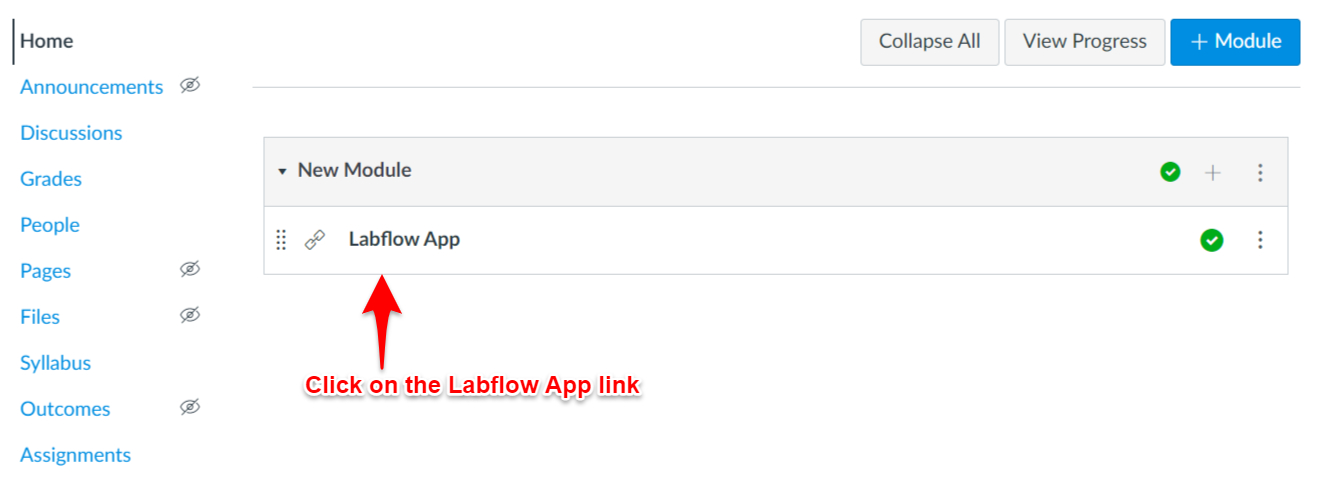
First click on the Labflow App link.
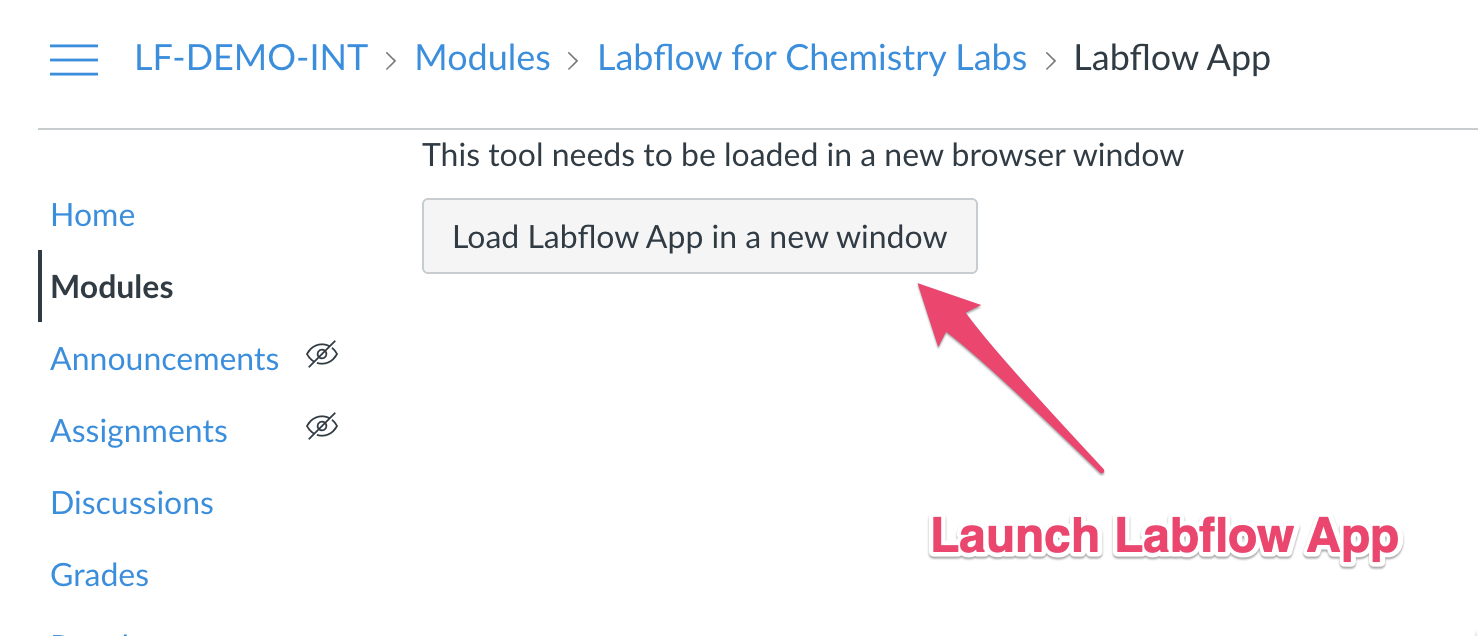
You should have been navigated to the App launching page. To launch Labflow click the “Load Labflow App in a new window” button.
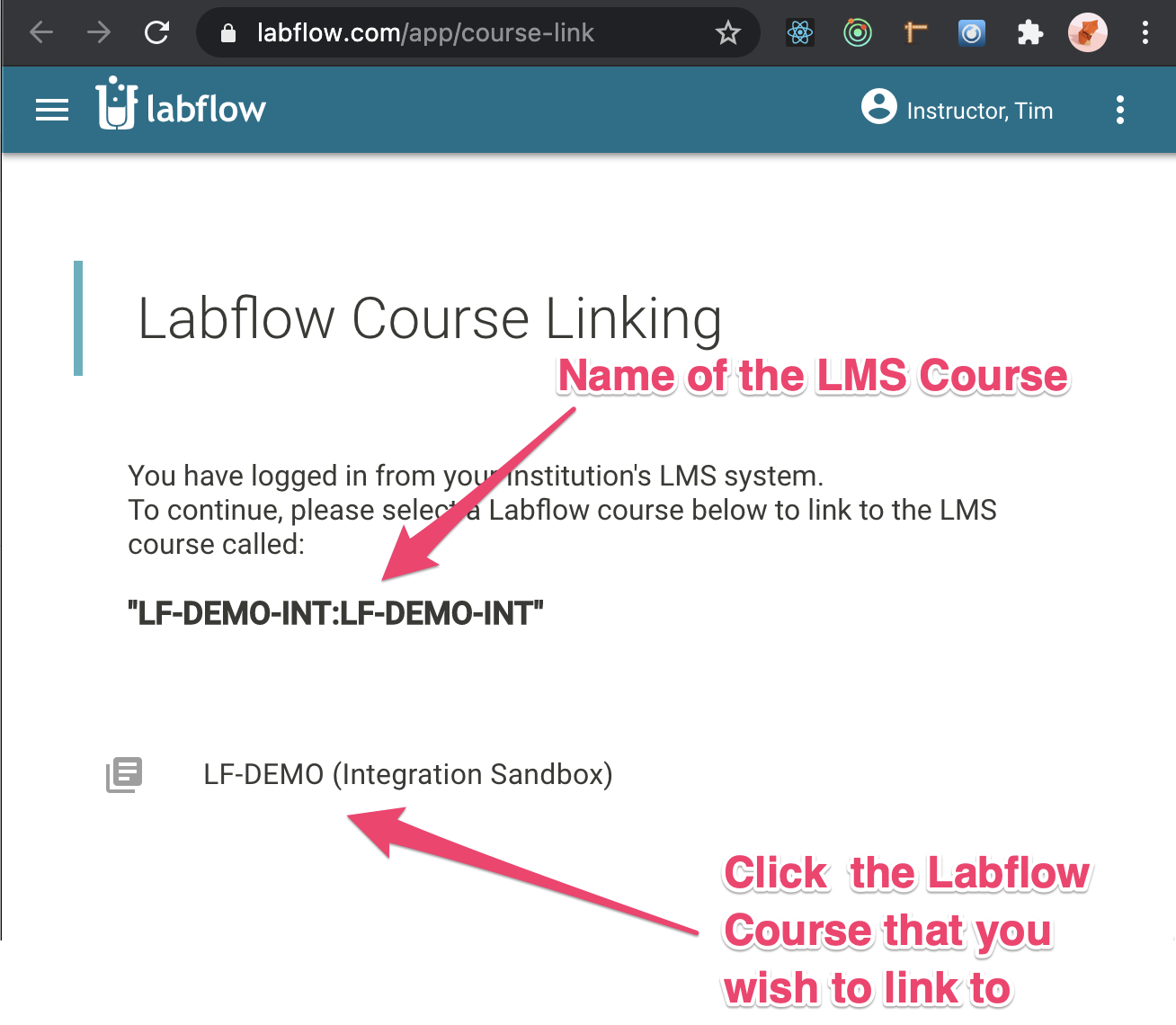
The Labflow App will launch in a new tab and prompt you to select which course to link to. Often an instructor will have multiple active Labflow courses that they are associated with. Identify the correct course in the list and click the link.
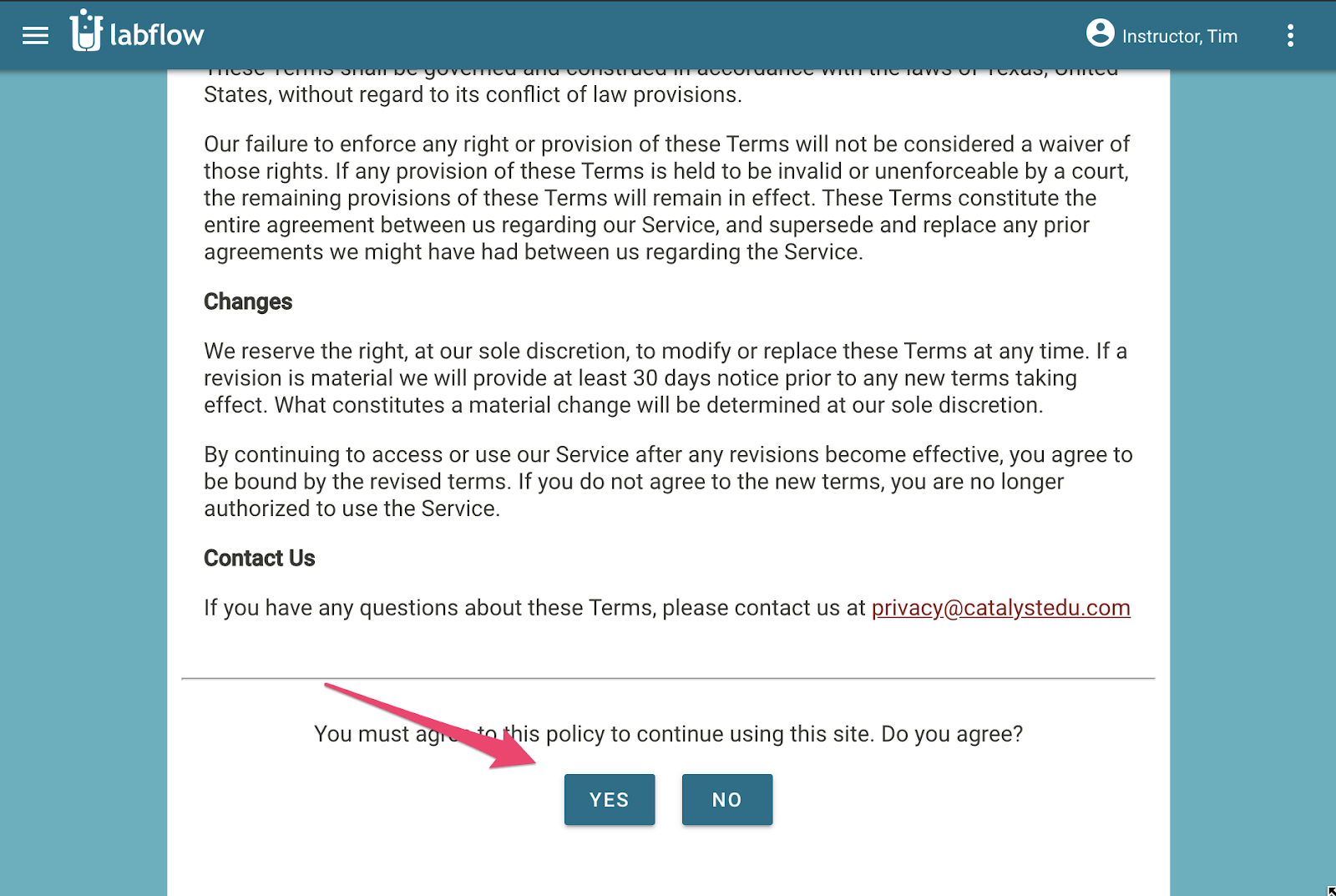
Proceed through to the terms of use agreement and select “Yes”.
You should be navigated to the final LTI setup page. If you are linking Labflow to your Canvas course for the first time you should see a page that looks like this:
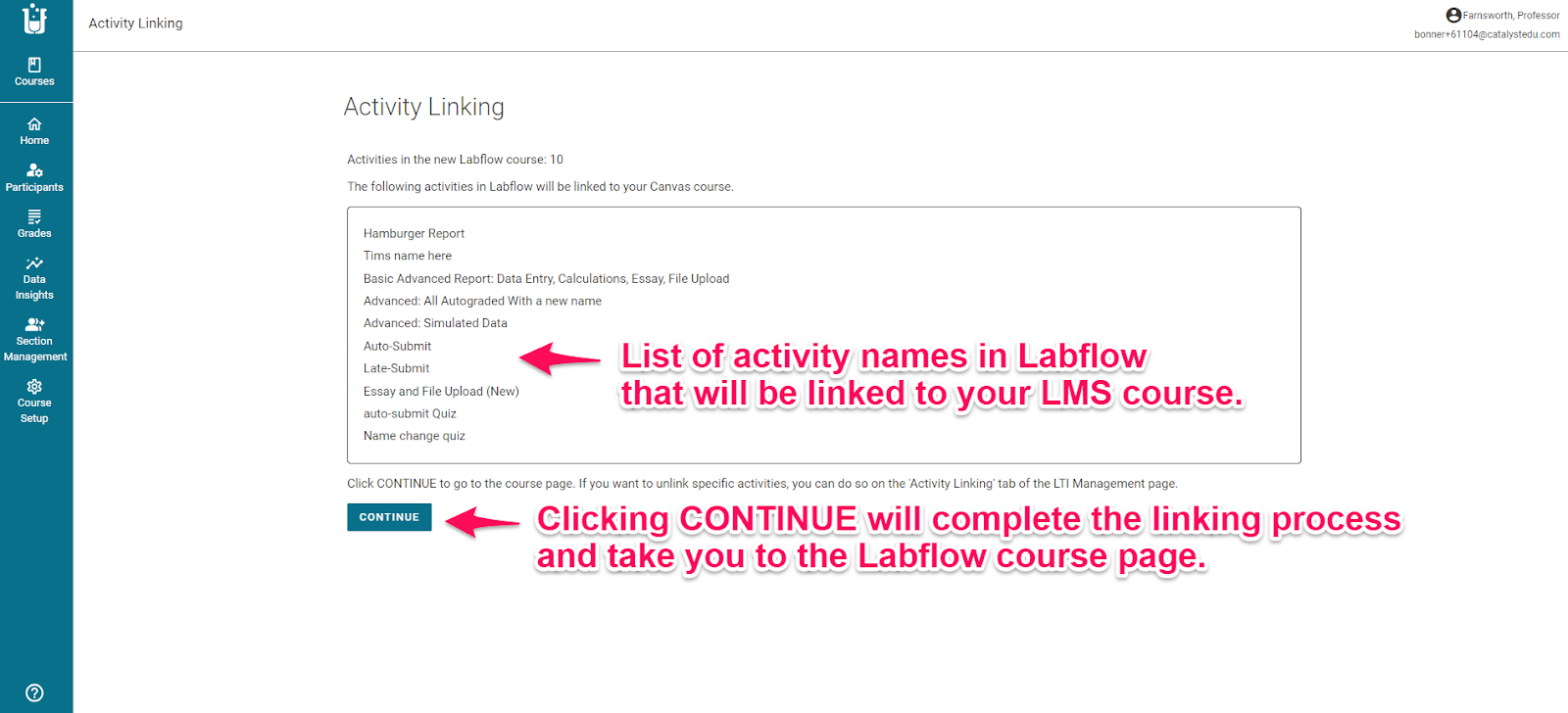
Clicking the CONTINUE button will complete the linking process and take you to the Labflow course page.
The listed assignments should now populate the ASSIGNMENTS page in your Canvas course.
If you are linking Labflow to a copied Canvas course (that was linked to Labflow for a previous term), you should see one of the following pages:

If the Canvas course was copied perfectly you should see the above page.
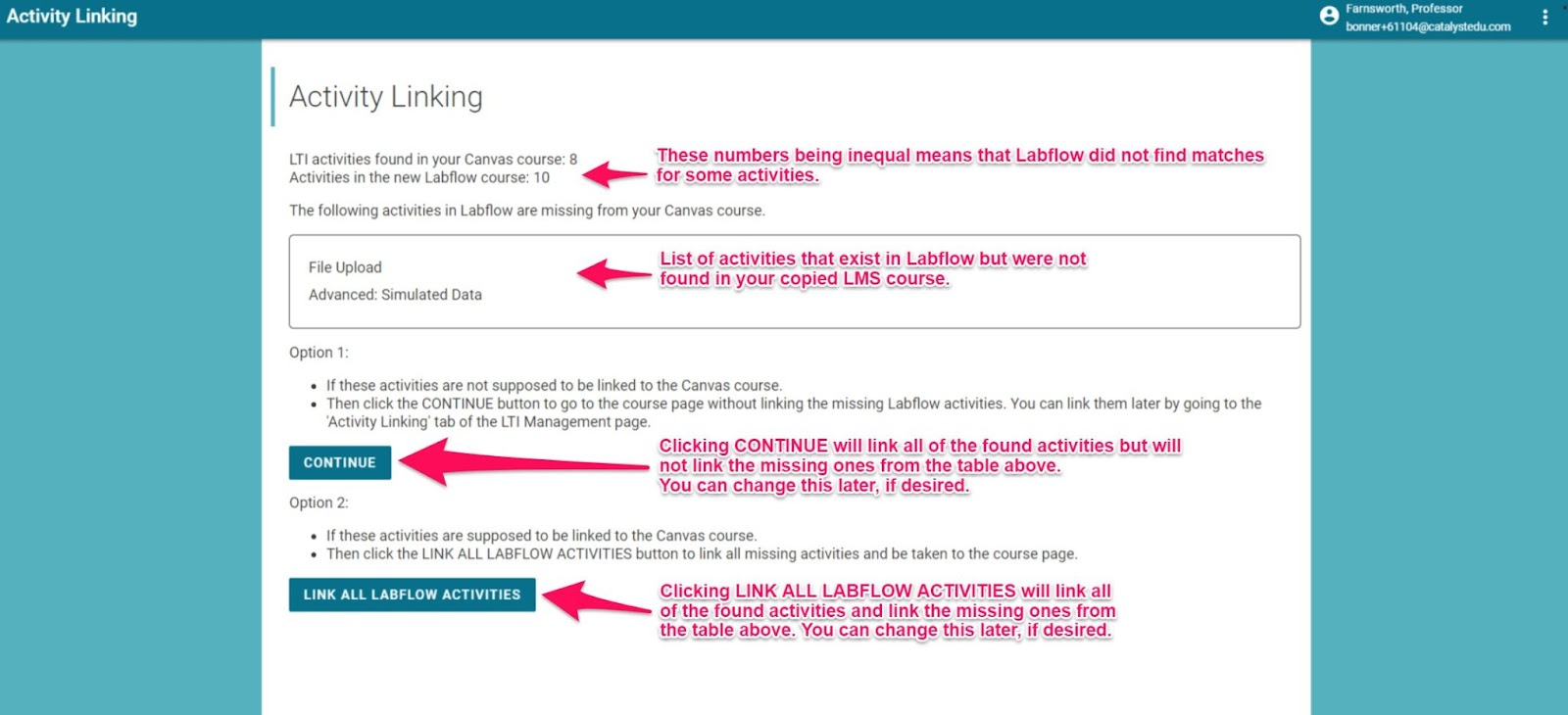
If the Canvas Course was copied but there are some missing Labflow assignments that were not found in the copied Canvas course, you should see the above page.
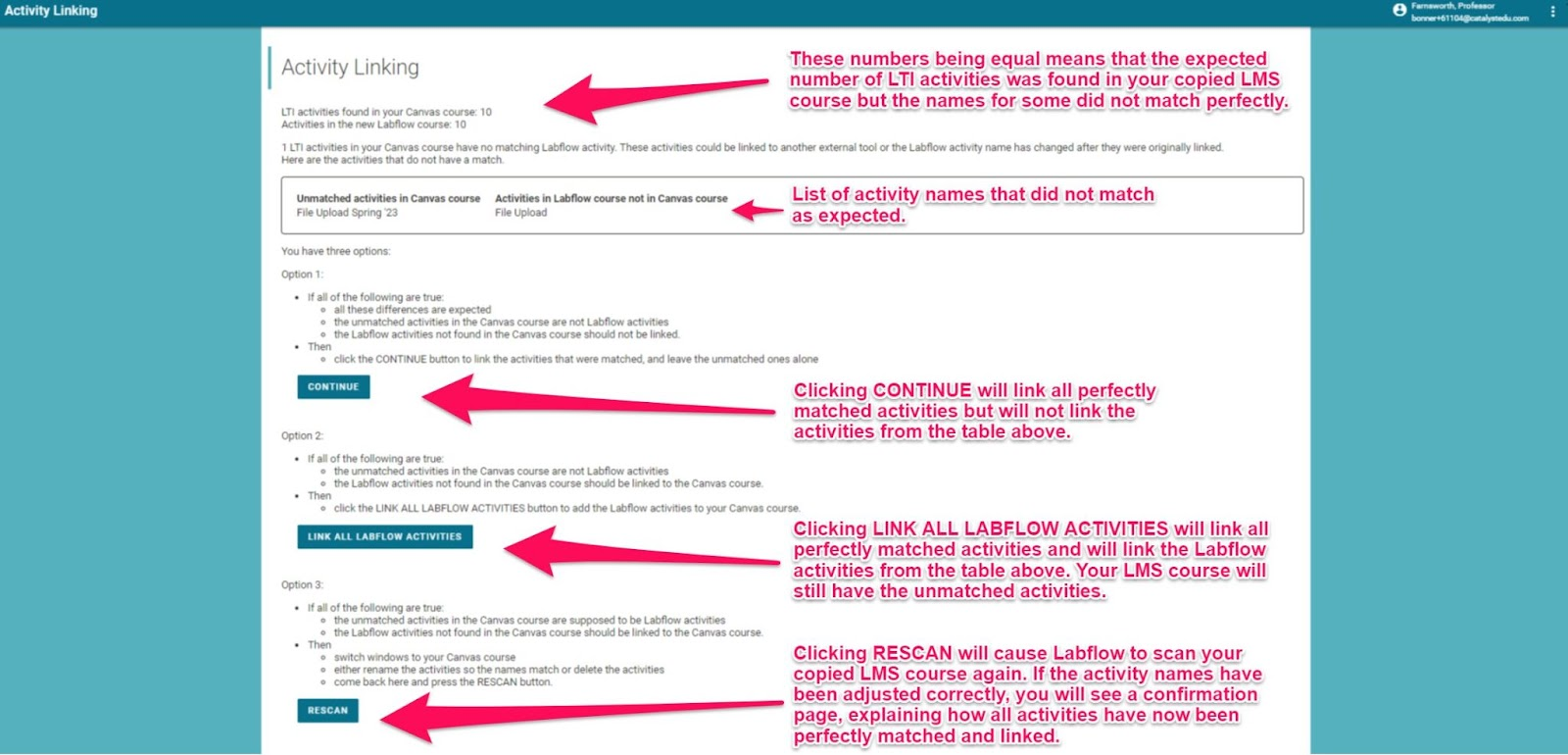
If there are some Labflow assignments that were found in the copied Canvas course but they do not have the expected names , you should see the above page.
Once you have completed the linking process and are on the Labflow course page, your course is fully linked.
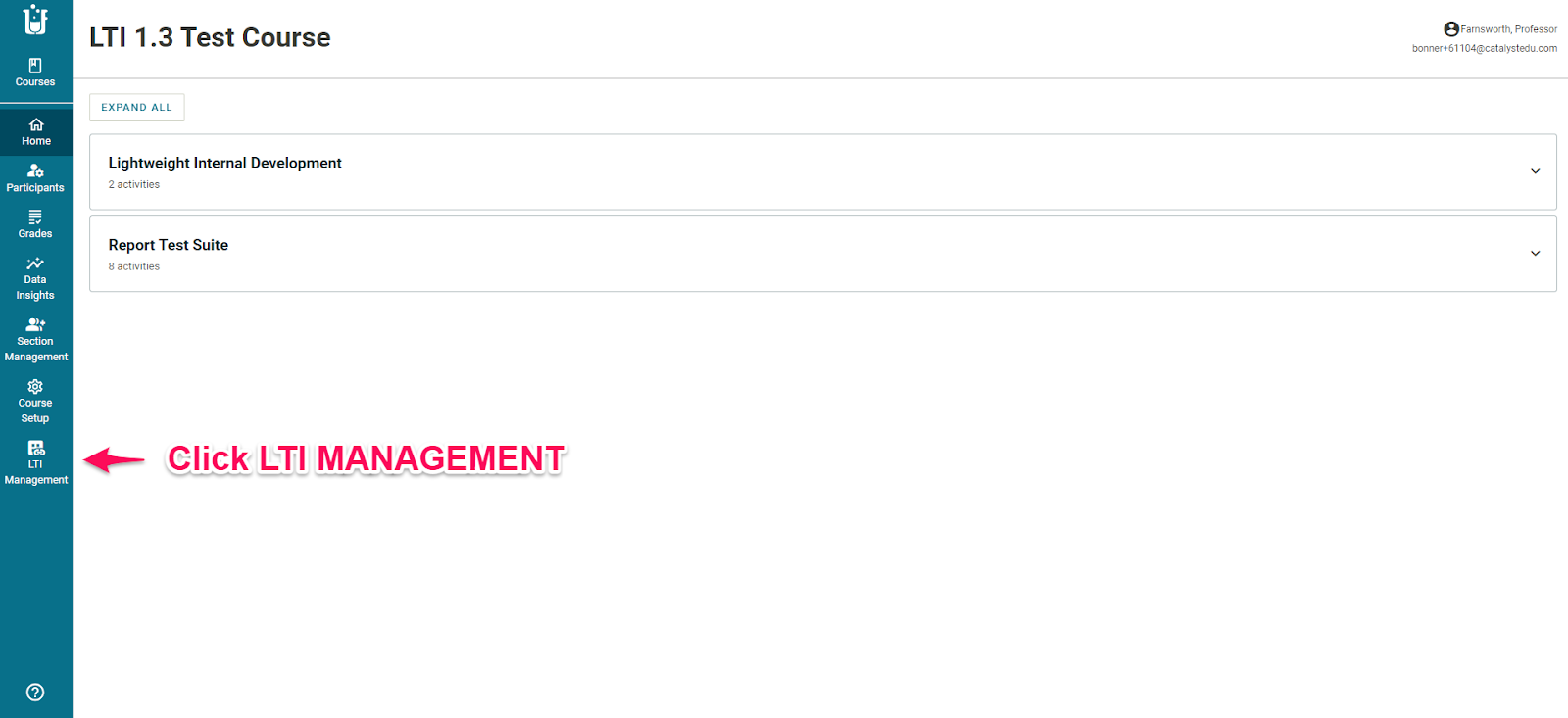
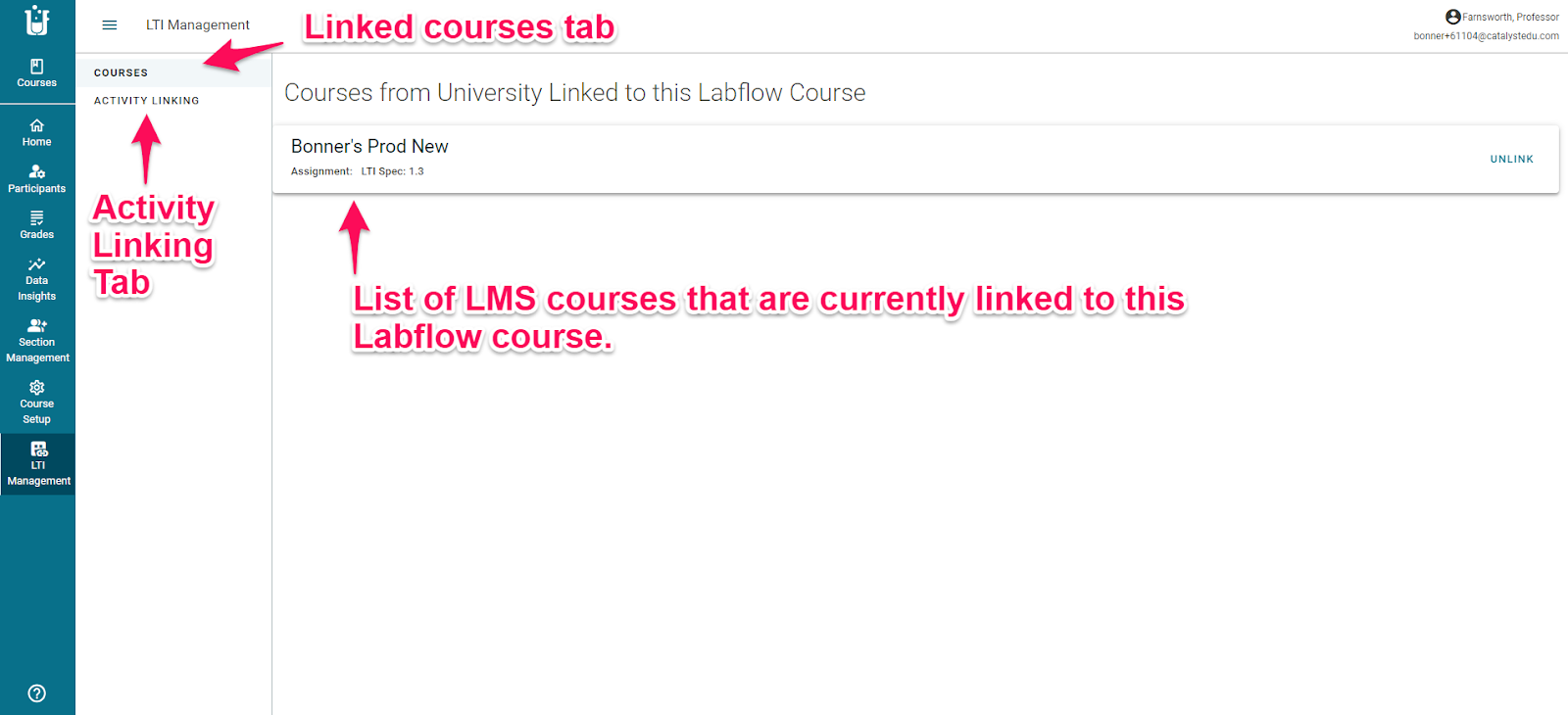
You can always adjust the link status of specific activities or link new ones by navigating to the ACTIVITY LINKING tab of the LTI MANAGEMENT page. See the screenshot below.
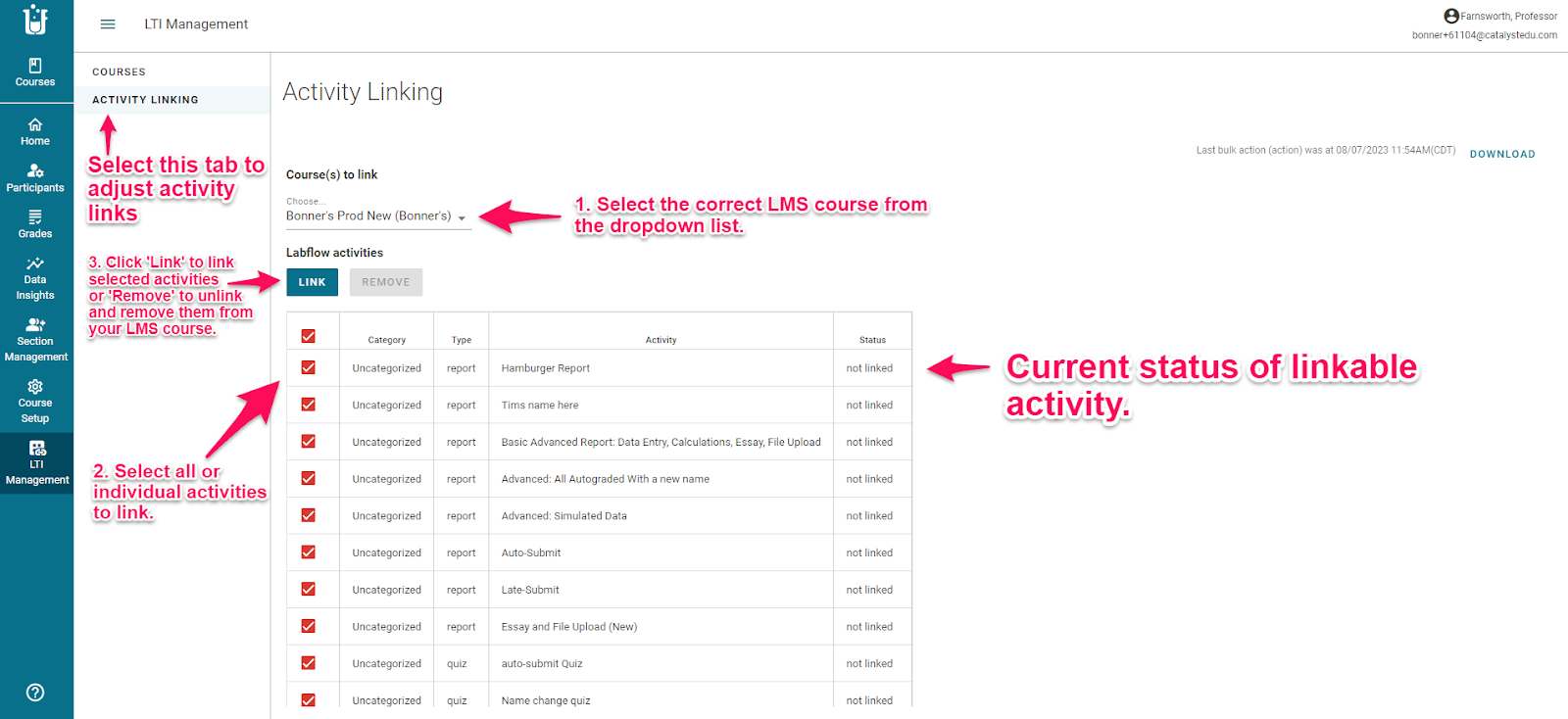
While the linking process is in progress it will look like this:

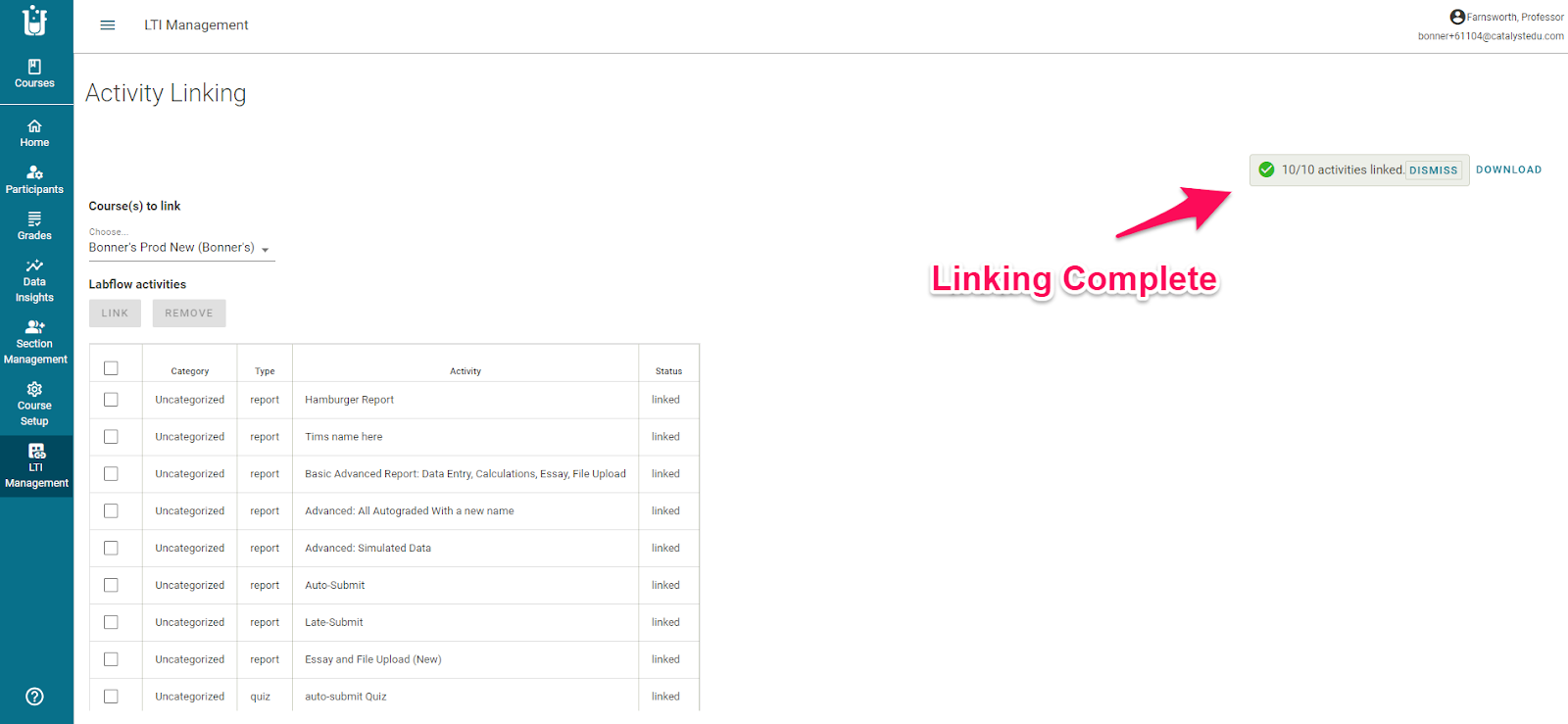
When the bulk activity link/unlink has completed it will look like the screenshot below.
Was this article helpful?
That’s Great!
Thank you for your feedback
Sorry! We couldn't be helpful
Thank you for your feedback
Feedback sent
We appreciate your effort and will try to fix the article